Die Menschen in Buenos Aires erinnern sich an den verstorbenen Franziskus wie an einen Nachbarn. Er war ihr Papst, auch wenn sie nicht alle politischen Ansichten teilten.
Eine Reportage von Julia Jaroschewski, Buenos Aires

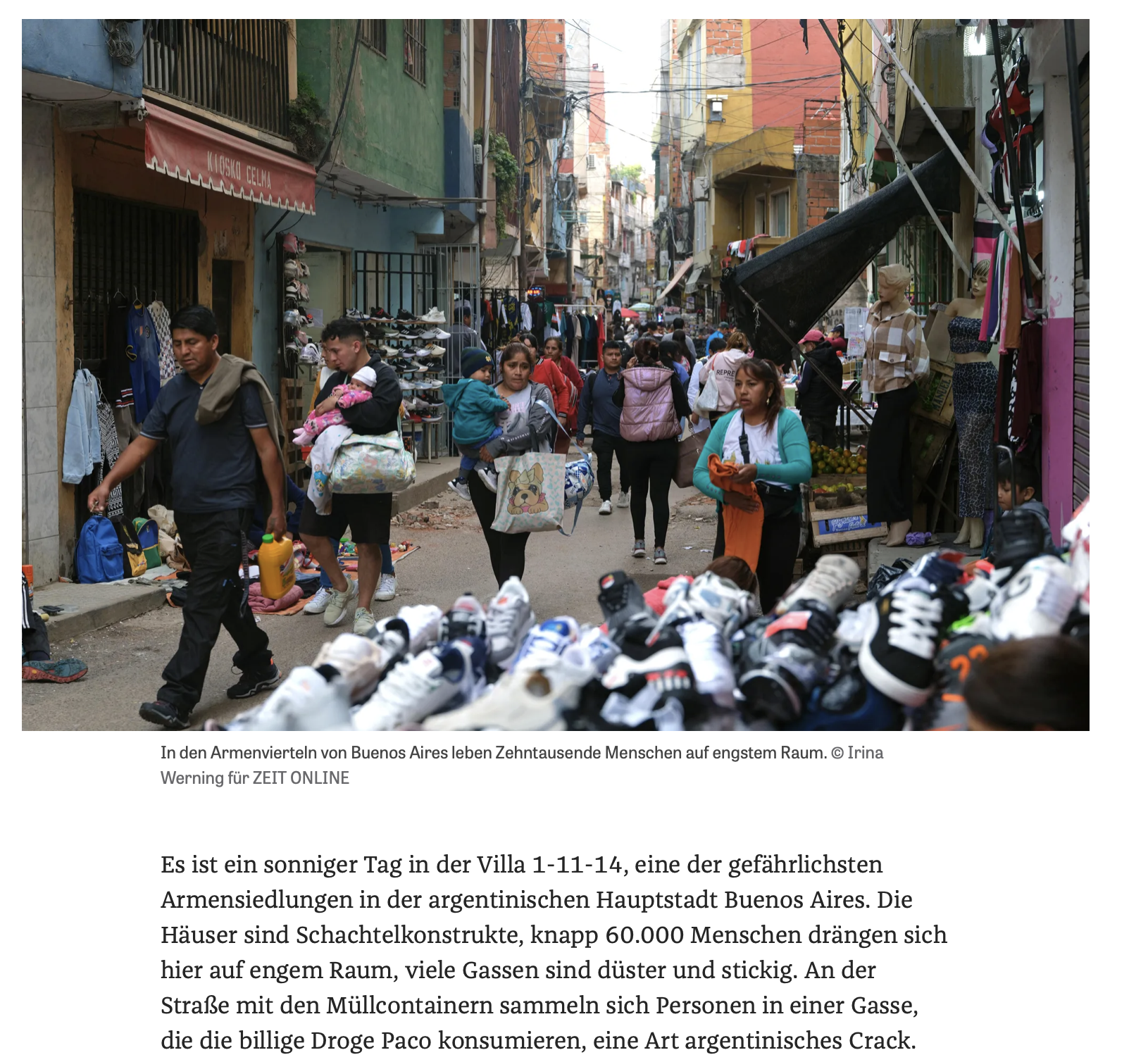
Hier lesen bei Zeit.de
Die Menschen in Buenos Aires erinnern sich an den verstorbenen Franziskus wie an einen Nachbarn. Er war ihr Papst, auch wenn sie nicht alle politischen Ansichten teilten.
Eine Reportage von Julia Jaroschewski, Buenos Aires
Hier lesen bei Zeit.de
Argentiniens Unis ermöglichen armen Bürgern den Aufstieg. Doch Präsident Javier Milei will sie nun kaputtsparen – weil sich dort Widerstand gegen seine Politik formiert.
Von Julia Jaroschewski, Buenos Aires
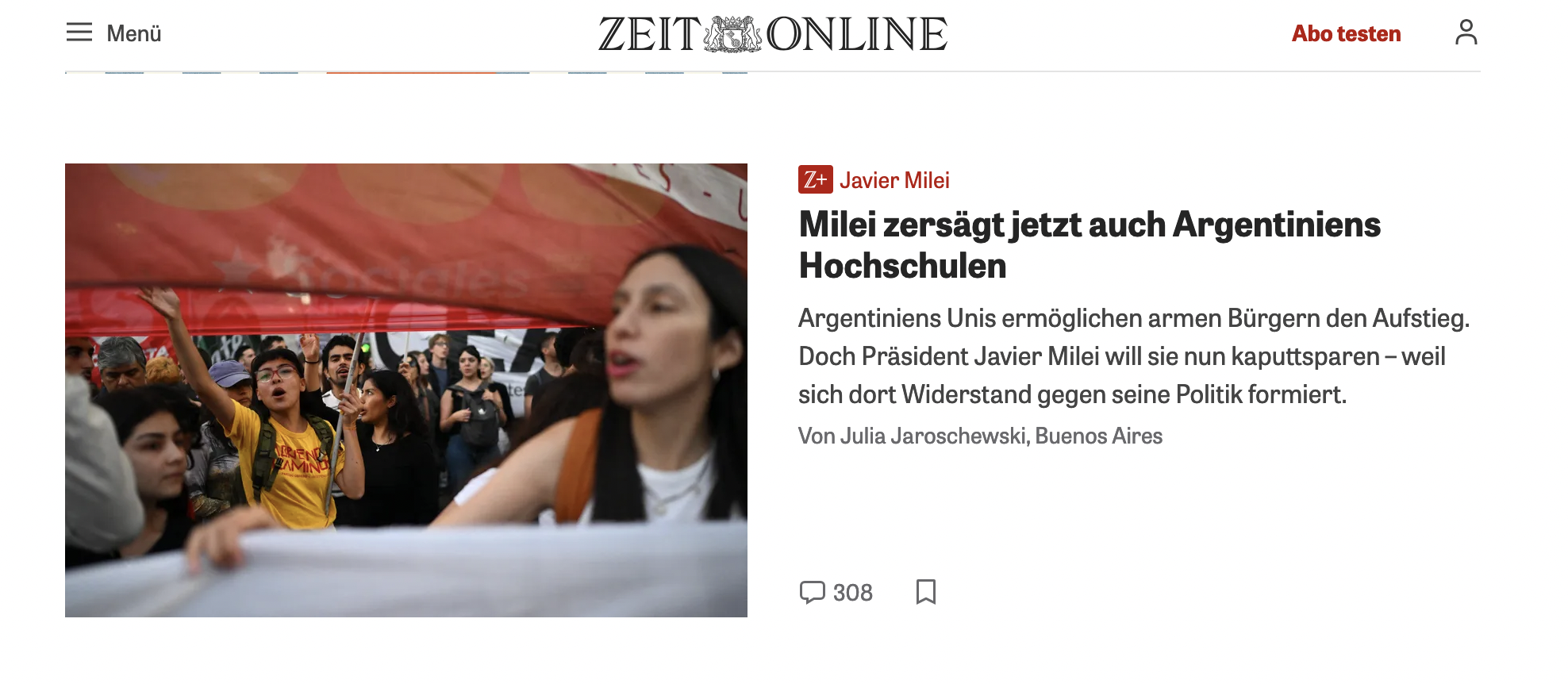
Hier den Text auf Zeit.de lesen
Das wirtschaftlich und politisch stabile Land Uruguay gilt als Investitionsparadies für Superreiche. Beim Immobilienerwerb oder der Gründung von Unternehmen erhalten Ausländer Steuererlässe und Privilegien wie vereinfachte Aufenthaltsgenehmigungen.
Julia Jaroschewski, Punta de Leste / Uruguay
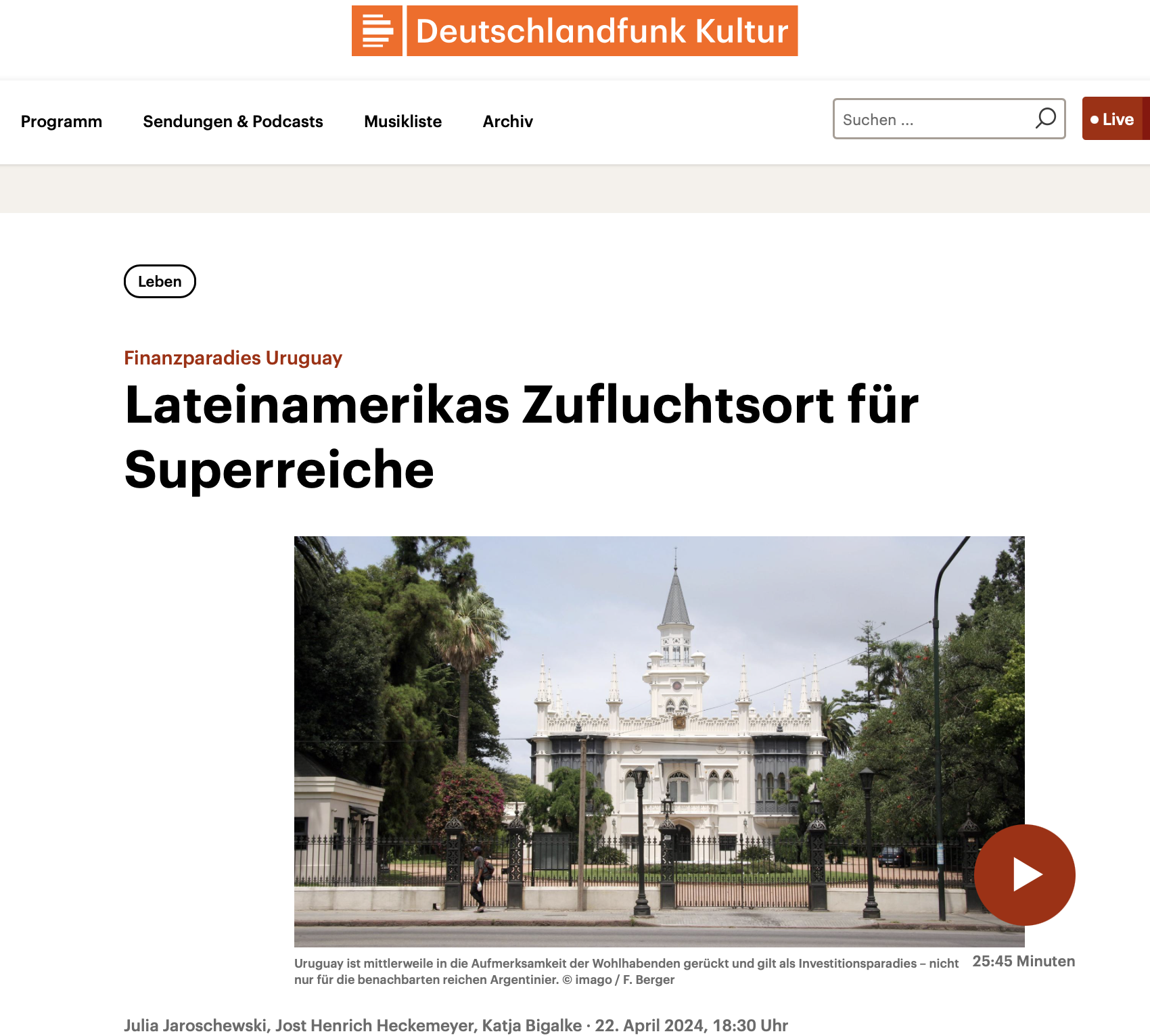
In der ARD Audiothek
Seit Dezember ist Javier Milei Argentiniens neuer Präsident. Gegen den Ultraliberalen mobilisiert eine Gruppe, die schon lange für die Modernisierung eines der traditionellsten Bereiche der argentinischen Kultur einsetzt: die Queer Tango Community.
Jaroschewski, Julia · 03. März 2024, 12:30 Uhr
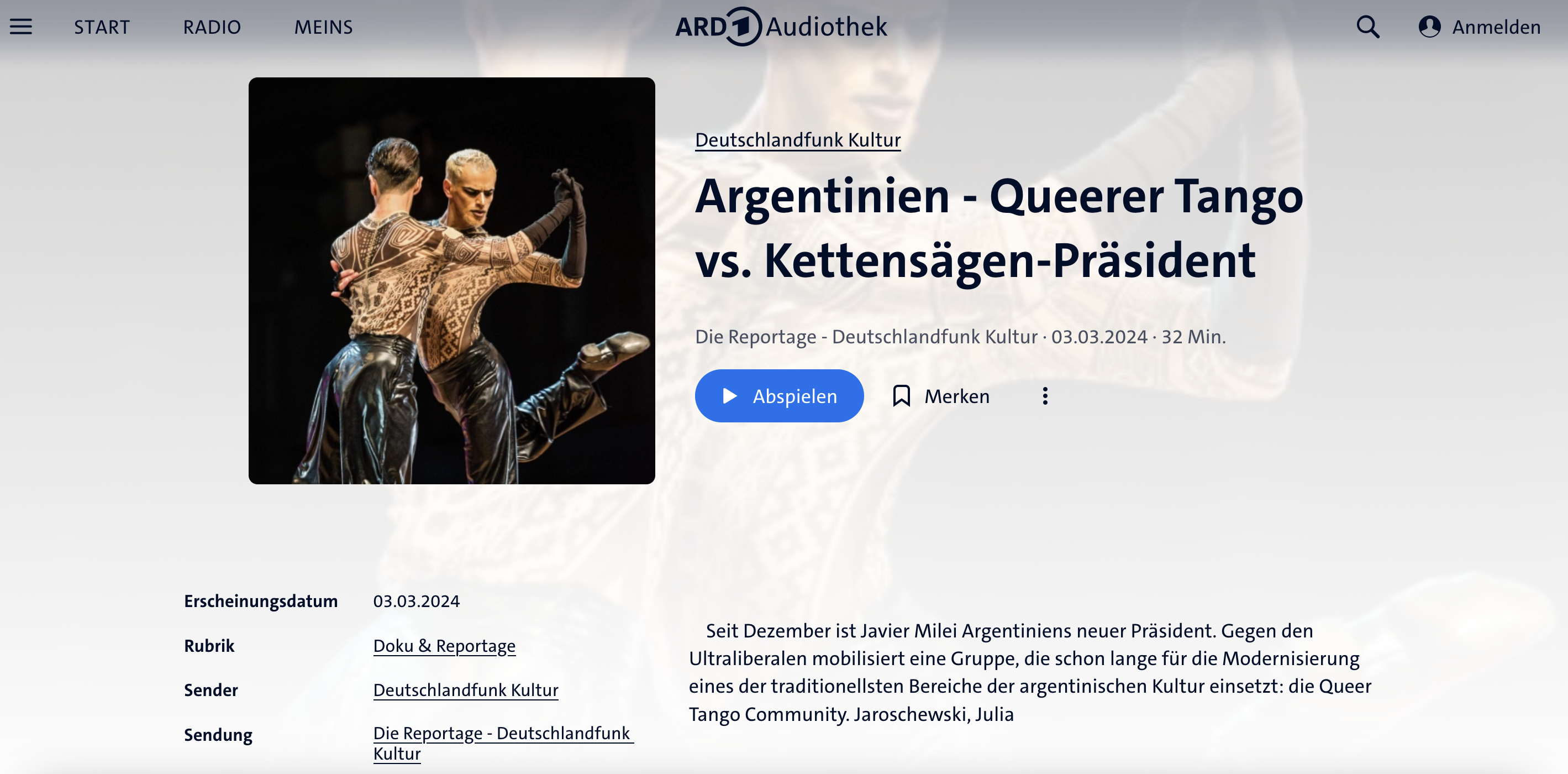
Hier auf DLF Kultur hören
Hier in der ARD Mediathek
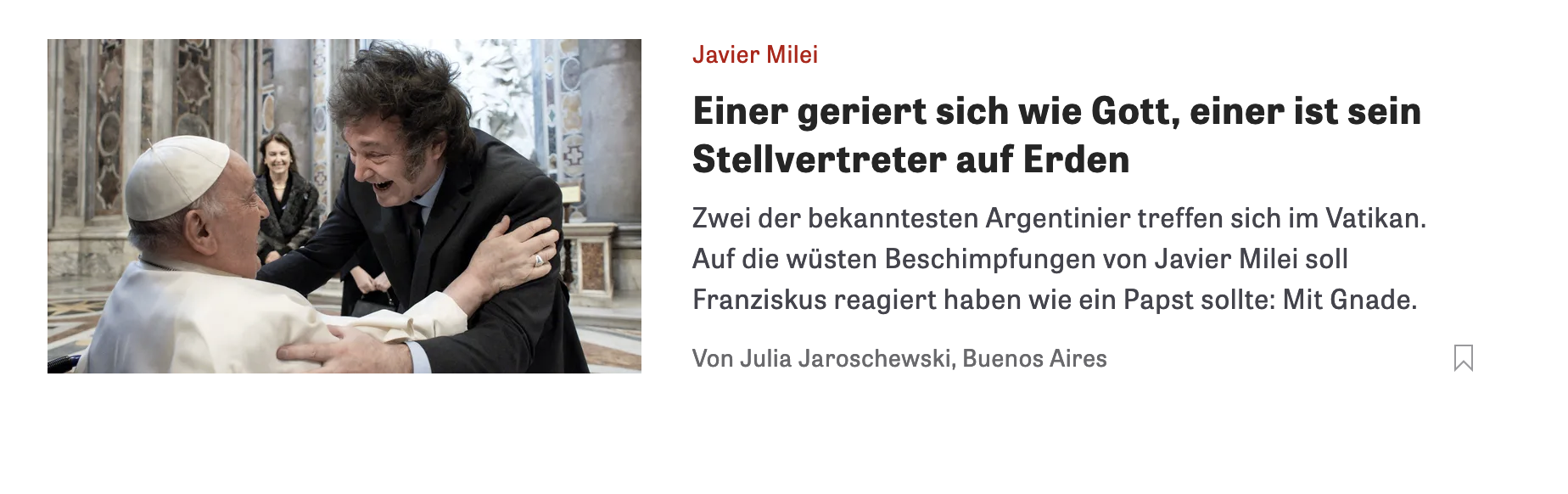
Continue readingZwei der bekanntesten Argentinier treffen sich im Vatikan. Auf die Beschimpfungen von Javier Milei soll Franziskus reagiert haben, wie ein Papst sollte: mit Gnade.
Präsident Javier Milei will Argentinien radikal reformieren. Doch seine Maßnahmen bringen die Menschen zur Verzweiflung – und auf die Straße.
Von Julia Jaroschewski, Buenos Aires

Tiktok bietet nicht nur unterhaltsame Clips, sondern ist auch Schauplatz für Krieg, Konflikt und Kriminalität. Journalist*innen erhalten etwa Einblicke in den Krieg in der Ukraine oder in den Alltag von Gangs und Kartellen – mit den richtigen Tricks und Tools. Text: Julia Jaroschewski und Sonja Peteranderl, Illustration: Joni Majer
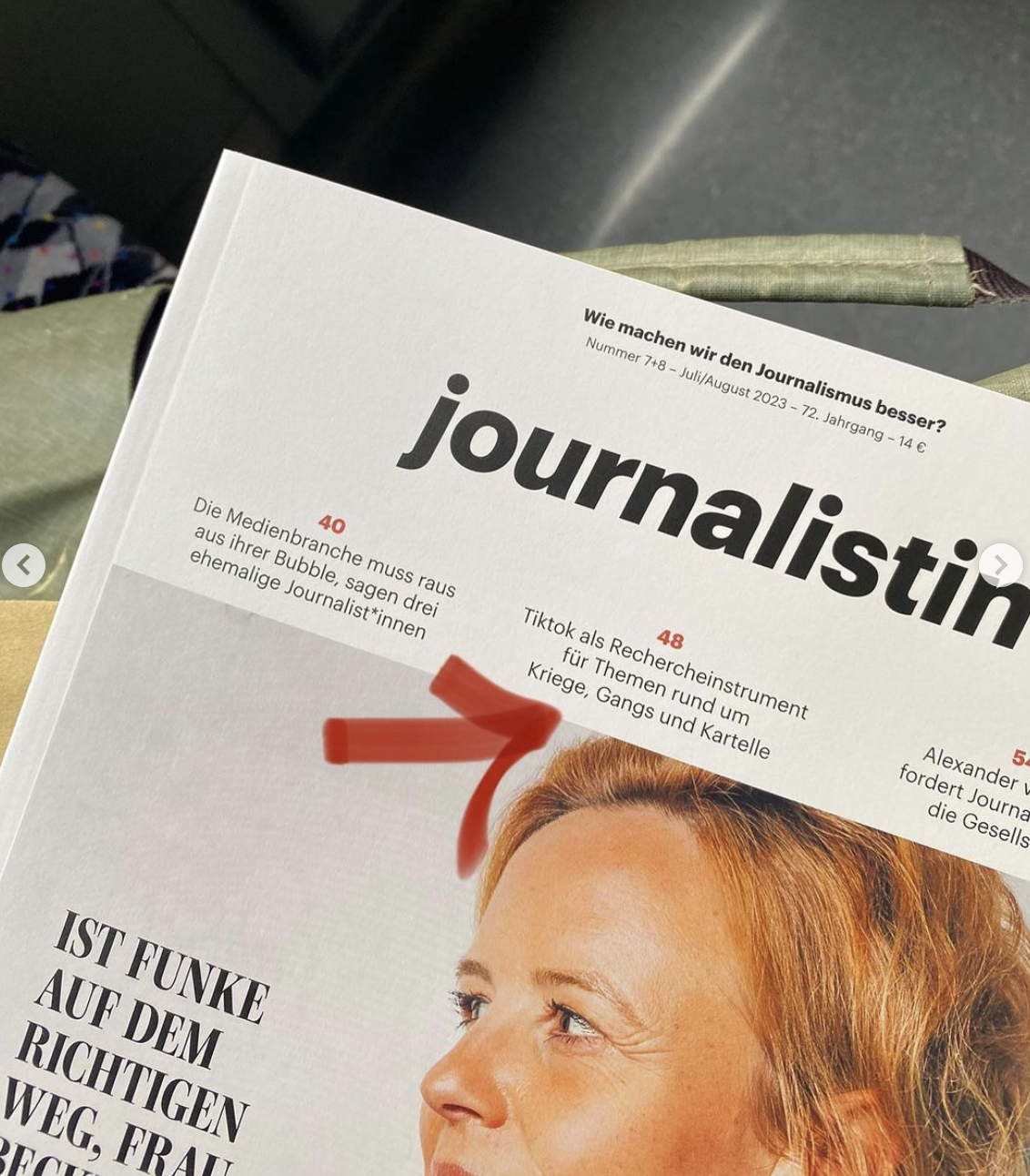
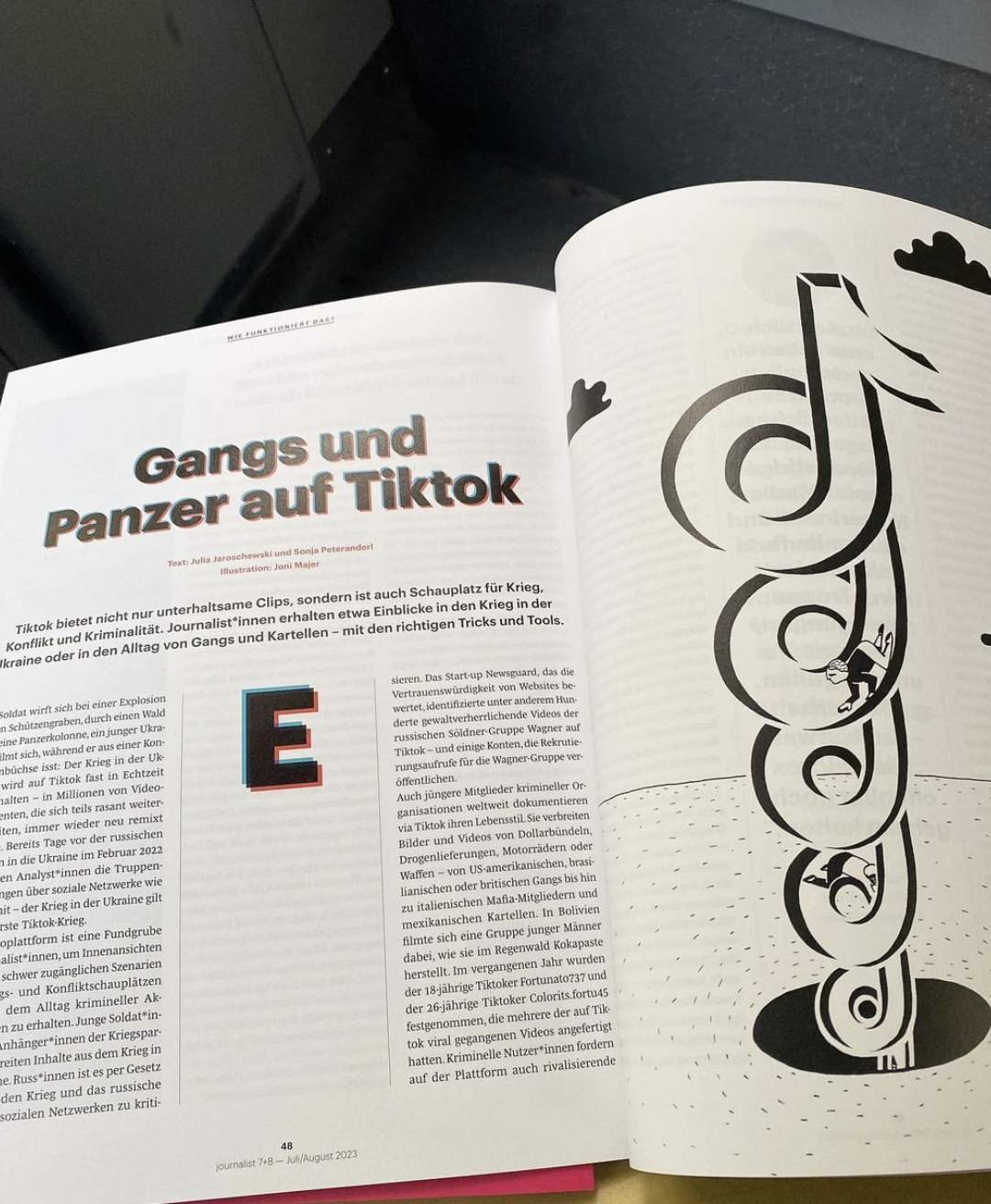
Hier lesen auf Journalist.de
At the recent Latin America-Caribbean Conference at the Foreign Federal Office in Berlin, we facilitated an interactive session titled “Global Changemakers: Cities as Future Labs” for the Global Diplomacy Lab. As founders of BuzzingCities Lab we explored how cities function as future labs for innovative forms of diplomacy and sustainable strategies. Discussions also centred on pain points and success factors of collaborative initiatives between emerging actors, the state and government institutions.


When a shooting takes place in Rio de Janeiro’s favelas, an app helps residents understand what’s going on – eyewitnesses can warn others where it is dangerous right now. ‘Fogo Cruzado‘ (crossfire) is a digital platform and an app that uses crowdsourcing to document shooting incidents and map violence. Cities like Rio de Janeiro that are struggling with challenges such as gun violence often develop creative solutions and technologies that can be transferred to other cities and countries.
Three takeaways:
#1 Informal stakeholders play a major role in urban change
Involvement of local, often informal actors in Latin American cities is essential to achieve sustainable transformation and master challenges. Grassroots initiatives such as waste-picker associations, street vendors and local civil rights activists are vital actors of change. Often, local initiatives have already developed solutions, but lack the opportunity to professionalise and reach out to a larger audience. They may also have no access to urban planning and political decision-makers or lack resources. Successful concepts for urban change have to take into account groups such as criminal organisations, i.e. gangs, militias or self-defence groups.
#2 Technology can provide life hacks and push for accountability
Chicagos Gangs bekriegen sich mittlerweile auch online. Und die Fehden im Netz heizen die Bandenkriege auf der Straße weiter an.

Screenshot Spiegel Online
Hier lesen auf Spiegel Online
Developing solutions to fight gender-based threats against female journalists was the main goal of a session organised by UNESCO, the Bosch Alumni Network and the GDL. GDL member Julia Jaroschewski and GDL Blog editor Mareike Enghusen, both freelance journalists and experienced moderators, facilitated the session. Their session was built on the motivation to tackle challenges such as a masculine culture in newsrooms or the lack of knowledge among the police, media executives and policymakers about online violence against women.

Screenshot GDL Blog
The event on ‘Online Safety of Women Journalists’ took place within the framework of the OSCE conference ‘Increasing Opportunities for Freedom of Expression and Media Pluralism’. The results of the event will directly influence a new UNESCO initiative addressing the harassment women journalists have to deal with in their daily work.
27 participants with different areas of expertise were brought together by the workshop to find solutions concerning the safety of women journalists online. The methodology consisted of two phases, each characterised by short brainstorming intervals. While the first phase served as a basis to work out potential research questions, the second section was used to develop ideas, ready to be incorporated into the UNESCO study. This unconventional and open format contributed to the positive outcome of the session. Continue reading
 jjreports